
The Ultimate Guide to Importing Egyptian Mangoes
Varieties, Seasons, and Sourcing Strategies
Agrinile
7/25/20268 min read
The Ultimate Guide to Importing Egyptian Mangoes: Varieties, Seasons, and Sourcing Strategies
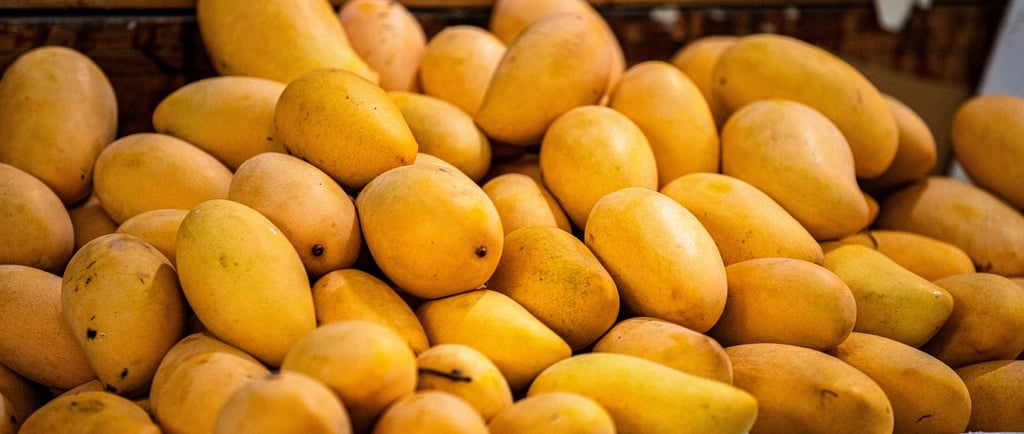
Egypt has rapidly emerged as a powerhouse in the global fresh fruit trade, with mangoes standing out as its second-largest fruit export after citrus . For international importers, wholesalers, and procurement teams, Egyptian mangoes represent a strategic sourcing opportunity. The country combines massive production volumes, premium quality, and a unique harvest window that perfectly fills the supply gaps left by Latin American and Asian origins .
This comprehensive guide explores everything B2B buyers need to know about importing Egyptian mangoes, from the most sought-after varieties and their seasonal availability to quality standards and logistics.
Why Source Mangoes from Egypt?
Egypt produces approximately two million tons of mangoes annually across more than 100,000 hectares of cultivation . In 2023, fresh mango exports reached around 72,500 metric tons, valued at over USD 133 million . Several key factors make Egypt an increasingly attractive origin for global buyers:
• Strategic Harvest Window: The Egyptian season runs from July through November, peaking between August and October . This timing is crucial as it coincides with a drop in supply from major Latin American producers like Mexico and Peru .
• Geographic Advantage: Situated at the crossroads of Africa, Asia, and Europe, Egypt offers short transit times. Major ports like Alexandria and Damietta are roughly 10 sailing days from key European hubs like Hamburg and Rotterdam .
• Diverse Cultivars: With over 30 commercial varieties grown across different climatic zones (from Aswan in the south to Ismailia and the Nile Delta), Egypt offers a staggered harvest and a wide range of flavor profiles to suit different regional preferences .
• Competitive Pricing: Favorable production costs and established agricultural infrastructure allow Egyptian exporters to offer highly competitive FOB pricing without compromising on quality .
Top Egyptian Mango Varieties for Export
While Egypt grows dozens of mango types, international trade focuses on a select group of varieties bred for durability, shelf life, and specific market preferences. European and Russian markets typically prioritize appearance, size, and shelf life, whereas Gulf and Arab markets heavily favor intense sweetness and rich flavor profiles .
1. Keitt
• Season: August to November (Late Season)
• Profile: Large size, vibrant green skin (often with a pink blush), completely fiberless, and smooth texture .
• Market Appeal: Keitt is Egypt's flagship export variety. Its exceptionally long harvest window allows importers to maintain supply late into the year when other origins are exhausted. It is highly favored in Europe, Russia, and the USA .
2. Kent
• Season: August onwards (Late Season)
• Profile: Large fruit (often 500–1000g), rich flavor, low fiber, and very juicy .
• Market Appeal: A premium variety that pairs with Keitt to dominate late-season exports. Its smooth flesh makes it a favorite among European retailers .
3. Naomi
• Season: July to August (Early to Mid-Season)
• Profile: Vibrant yellow/golden skin, oval shape, rich tropical taste, and fiberless golden pulp .
• Market Appeal: Naomi is a rising star, particularly in Europe and the GCC. It offers excellent shelf life under refrigerated sea freight and striking visual appeal .
4. Osteen
• Season: July to September
• Profile: Distinctive yellow skin with purple spots, smooth texture, and irresistibly sweet pulp .
• Market Appeal: A premium visual variety that stands out on retail shelves. Its long shelf life provides excellent distribution flexibility, making it perfect for the core Gulf import window .
5. Tommy Atkins
• Season: June to July (Early Season)
• Profile: Firm flesh, highly durable, and classic mango appearance .
• Market Appeal: Known for its exceptional shipping durability, Tommy Atkins is a reliable choice for early-season long sea voyages and entry-level markets .
6. Regional Favorites (Ewais, Zebda, Baaz)
Egypt is also famous for indigenous varieties prized for their unique flavors:
• Ewais (Owaisi): Widely considered the best-tasting Egyptian mango, featuring a sweet-and-sour profile. It is highly sought after in Arab markets and is beginning to enter premium European trial programs .
• Zebda (Zebdia): A juicier, softer variety traditionally used for juicing domestically, but increasingly exported to Gulf markets that appreciate its sharp, sour-sweet taste .
• Baaz: A Gulf market favorite available in August and September, known for its melt-in-the-mouth texture and a unique watermelon-like sweetness .
The Egyptian Mango Export Season
Understanding the harvest calendar is essential for planning procurement programs. Egypt's diverse growing regions, from the early-ripening warmth of Upper Egypt to the high-volume zones of Ismailia and the Nile Delta, create a continuous supply curve .
Successful mango importation relies heavily on rigorous post-harvest handling. Mangoes are climacteric fruits, meaning they continue to ripen after being picked. Therefore, export-grade fruit is harvested mature-green to withstand transit and ripen perfectly upon arrival .
Post-Harvest Process
Reputable Egyptian exporters follow strict protocols to ensure quality:
1 - Field Selection: Hand-picking at optimal maturity, with Brix (sugar level) testing per lot .
2 - Pre-Cooling: Immediate transfer to cold storage (10–13°C) to remove field heat and halt premature ripening .
3 - Grading and Sizing: Fruit is inspected for blemishes and sized (typically above 300 grams for export) .
4 - Phytosanitary Treatment: To comply with international quarantine regulations (especially regarding fruit flies), shipments often undergo hot water treatment to achieve a 99.9968% pest kill rate .
Packaging Standards
Packaging is designed to protect the easily bruised fruit while meeting retail requirements:
• 4.5 kg to 5 kg Cartons: The industry standard for retail-ready supermarket displays .
• 10 kg Bulk Cartons: Used for foodservice and wholesale repacking .
• Palletization: ISPM-15 heat-treated, stamped wood pallets are standard .
Certifications Required for Import
To access stringent markets like the EU and the UK, buyers should ensure their Egyptian suppliers hold the following certifications:
• GLOBALG.A.P.: Ensures good agricultural practices at the farm level .
• HACCP / ISO 22000: Guarantees food safety in the packhouse .
• SMETA / GRASP: Verifies social compliance and ethical trade practices .
• Phytosanitary Certificate: Issued by Egypt’s Central Administration of Plant Quarantine (CAPQ) .
How to Start Sourcing from Egypt
For importers looking to establish a reliable supply chain from Egypt, follow these best practices:
1 - Match Variety to Market: Specify your target market. Route Keitt and Kent to Europe for shelf life, and Ewais or Baaz to the Gulf for flavor .
2 - Request Samples: Ask for air-freighted samples to verify ripeness, flavor, and fiber content before committing to volume .
3 - Confirm Packaging: Clearly agree on carton sizes (e.g., 4.5 kg retail vs. 10 kg bulk) and minimum fruit weight (e.g., 300g+) .
4 - Verify Cold Chain: Ensure the supplier utilizes immediate pre-cooling and continuous temperature logging during sea freight .
5 - Check Certifications: Demand proof of GLOBALG.A.P. and HACCP compliance before finalizing orders .
By leveraging Egypt's strategic harvest window, diverse premium varieties, and rigorous export standards, global importers can secure a highly profitable and reliable mango supply chain.
The Ultimate Guide to Importing Egyptian Mangoes: Varieties, Seasons, and Sourcing Strategies
Egypt has rapidly emerged as a powerhouse in the global fresh fruit trade, with mangoes standing out as its second-largest fruit export after citrus . For international importers, wholesalers, and procurement teams, Egyptian mangoes represent a strategic sourcing opportunity. The country combines massive production volumes, premium quality, and a unique harvest window that perfectly fills the supply gaps left by Latin American and Asian origins .
This comprehensive guide explores everything B2B buyers need to know about importing Egyptian mangoes, from the most sought-after varieties and their seasonal availability to quality standards and logistics.
Why Source Mangoes from Egypt?
Egypt produces approximately two million tons of mangoes annually across more than 100,000 hectares of cultivation . In 2023, fresh mango exports reached around 72,500 metric tons, valued at over USD 133 million . Several key factors make Egypt an increasingly attractive origin for global buyers:
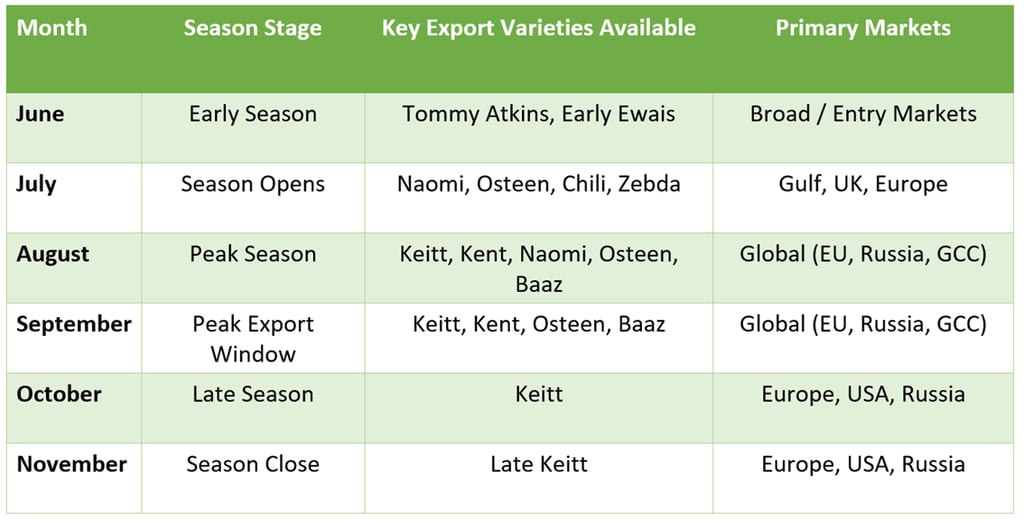
• Strategic Harvest Window: The Egyptian season runs from July through November, peaking between August and October . This timing is crucial as it coincides with a drop in supply from major Latin American producers like Mexico and Peru .
• Geographic Advantage: Situated at the crossroads of Africa, Asia, and Europe, Egypt offers short transit times. Major ports like Alexandria and Damietta are roughly 10 sailing days from key European hubs like Hamburg and Rotterdam .
• Diverse Cultivars: With over 30 commercial varieties grown across different climatic zones (from Aswan in the south to Ismailia and the Nile Delta), Egypt offers a staggered harvest and a wide range of flavor profiles to suit different regional preferences .
• Competitive Pricing: Favorable production costs and established agricultural infrastructure allow Egyptian exporters to offer highly competitive FOB pricing without compromising on quality .
Top Egyptian Mango Varieties for Export
While Egypt grows dozens of mango types, international trade focuses on a select group of varieties bred for durability, shelf life, and specific market preferences. European and Russian markets typically prioritize appearance, size, and shelf life, whereas Gulf and Arab markets heavily favor intense sweetness and rich flavor profiles .
1. Keitt
• Season: August to November (Late Season)
• Profile: Large size, vibrant green skin (often with a pink blush), completely fiberless, and smooth texture .
• Market Appeal: Keitt is Egypt's flagship export variety. Its exceptionally long harvest window allows importers to maintain supply late into the year when other origins are exhausted. It is highly favored in Europe, Russia, and the USA .
2. Kent
• Season: August onwards (Late Season)
• Profile: Large fruit (often 500–1000g), rich flavor, low fiber, and very juicy .
• Market Appeal: A premium variety that pairs with Keitt to dominate late-season exports. Its smooth flesh makes it a favorite among European retailers .
3. Naomi
• Season: July to August (Early to Mid-Season)
• Profile: Vibrant yellow/golden skin, oval shape, rich tropical taste, and fiberless golden pulp .
• Market Appeal: Naomi is a rising star, particularly in Europe and the GCC. It offers excellent shelf life under refrigerated sea freight and striking visual appeal .
4. Osteen
• Season: July to September
• Profile: Distinctive yellow skin with purple spots, smooth texture, and irresistibly sweet pulp .
• Market Appeal: A premium visual variety that stands out on retail shelves. Its long shelf life provides excellent distribution flexibility, making it perfect for the core Gulf import window .
5. Tommy Atkins
• Season: June to July (Early Season)
• Profile: Firm flesh, highly durable, and classic mango appearance .
• Market Appeal: Known for its exceptional shipping durability, Tommy Atkins is a reliable choice for early-season long sea voyages and entry-level markets .
6. Regional Favorites (Ewais, Zebda, Baaz)
Egypt is also famous for indigenous varieties prized for their unique flavors:
• Ewais (Owaisi): Widely considered the best-tasting Egyptian mango, featuring a sweet-and-sour profile. It is highly sought after in Arab markets and is beginning to enter premium European trial programs .
• Zebda (Zebdia): A juicier, softer variety traditionally used for juicing domestically, but increasingly exported to Gulf markets that appreciate its sharp, sour-sweet taste .
• Baaz: A Gulf market favorite available in August and September, known for its melt-in-the-mouth texture and a unique watermelon-like sweetness .
The Egyptian Mango Export Season
Understanding the harvest calendar is essential for planning procurement programs. Egypt's diverse growing regions, from the early-ripening warmth of Upper Egypt to the high-volume zones of Ismailia and the Nile Delta, create a continuous supply curve .
Successful mango importation relies heavily on rigorous post-harvest handling. Mangoes are climacteric fruits, meaning they continue to ripen after being picked. Therefore, export-grade fruit is harvested mature-green to withstand transit and ripen perfectly upon arrival .
Post-Harvest Process
Reputable Egyptian exporters follow strict protocols to ensure quality:
1 - Field Selection: Hand-picking at optimal maturity, with Brix (sugar level) testing per lot .
2 - Pre-Cooling: Immediate transfer to cold storage (10–13°C) to remove field heat and halt premature ripening .
3 - Grading and Sizing: Fruit is inspected for blemishes and sized (typically above 300 grams for export) .
4 - Phytosanitary Treatment: To comply with international quarantine regulations (especially regarding fruit flies), shipments often undergo hot water treatment to achieve a 99.9968% pest kill rate .
Packaging Standards
Packaging is designed to protect the easily bruised fruit while meeting retail requirements:
• 4.5 kg to 5 kg Cartons: The industry standard for retail-ready supermarket displays .
• 10 kg Bulk Cartons: Used for foodservice and wholesale repacking .
• Palletization: ISPM-15 heat-treated, stamped wood pallets are standard .
Certifications Required for Import
To access stringent markets like the EU and the UK, buyers should ensure their Egyptian suppliers hold the following certifications:
• GLOBALG.A.P.: Ensures good agricultural practices at the farm level .
• HACCP / ISO 22000: Guarantees food safety in the packhouse .
• SMETA / GRASP: Verifies social compliance and ethical trade practices .
• Phytosanitary Certificate: Issued by Egypt’s Central Administration of Plant Quarantine (CAPQ) .
How to Start Sourcing from Egypt
For importers looking to establish a reliable supply chain from Egypt, follow these best practices:
1 - Match Variety to Market: Specify your target market. Route Keitt and Kent to Europe for shelf life, and Ewais or Baaz to the Gulf for flavor .
2 - Request Samples: Ask for air-freighted samples to verify ripeness, flavor, and fiber content before committing to volume .
3 - Confirm Packaging: Clearly agree on carton sizes (e.g., 4.5 kg retail vs. 10 kg bulk) and minimum fruit weight (e.g., 300g+) .
4 - Verify Cold Chain: Ensure the supplier utilizes immediate pre-cooling and continuous temperature logging during sea freight .
5 - Check Certifications: Demand proof of GLOBALG.A.P. and HACCP compliance before finalizing orders .
By leveraging Egypt's strategic harvest window, diverse premium varieties, and rigorous export standards, global importers can secure a highly profitable and reliable mango supply chain.
Agrinile
Reliable exports of fresh Egyptian produce worldwide
Contacts
Stay Updated
© 2026. All rights reserved.
Navigate